
Connecting Europe’s Cancer Centres
CONNECT aims to connect industry with Europe’s emerging network of Comprehensive Cancer Centres, accelerating research, innovation and patient access to new solutions.
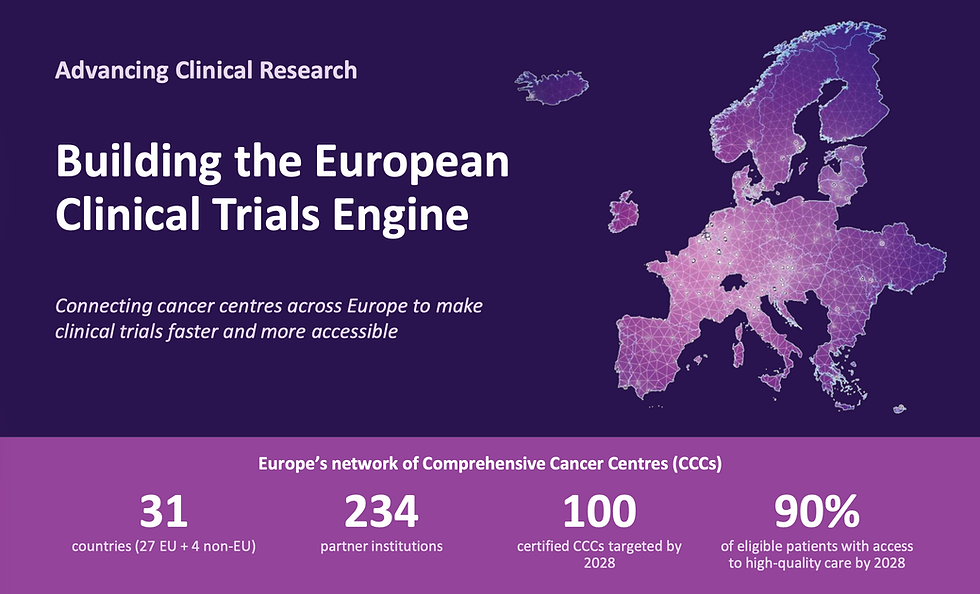
Illustration: EUnetCCC
Europe is building a network of Comprehensive Cancer Centres, or CCCs, that can work together across national borders. Through the European Joint Action called EUnetCCC, 234 partner institutions in 31 countries are contributing to a shared ambition: 100 certified CCCs by 2028 and access to high-quality cancer care for 90 per cent of eligible patients.
The opportunity goes beyond connecting leading institutions. A mature CCC network could become a distributed European infrastructure for cancer research, clinical trials, precision diagnostics, health data, prevention and the implementation of new solutions.
"Cutting-edge cancer care is complex and requires integration of expertise, experience sharing and a willingness to learn. Building a European ecosystem through CCC networks will be important to ensure equity and excellence in cancer care," said Knut Martin Torgersen, project manager for CONNECT.
Shared challenges
CONNECT will explore how companies can engage with CCCs at network level, complementing existing partnerships with individual hospitals and research institutions. The starting point should be the challenges that cancer centres and patients need to solve, rather than individual technologies or commercial opportunities.
"CONNECT represents a successful model of public-private partnership that is scalable to both the Nordic and European level. Industry partnership through a CONNECT-like model should strengthen the capabilities of the CCC network and accelerate patient benefit, while maintaining public interest, scientific independence, transparent governance and equitable access", said Torgersen.
Potential areas for collaboration include clinical trial infrastructure, precision diagnostics, digital pathology, AI validation, real-world evidence and patient identification for research. A coordinated network could make it easier to test solutions across different healthcare systems, generate more representative evidence and share successful approaches between centres.
An immediate opportunity
Clinical trials offer an immediate opportunity. EUnetCCC is already developing a network of Clinical Trial Units, shared resources and expert groups, while working with industry, regulators, academic sponsors and patients. The aim is to improve access to trials, accelerate recruitment and reduce administrative and regulatory barriers.
EUnetCCC arranged a satellite event at ESMO 2026 in Madrid on 23 October, where CONNECT interviewed companies and hospitals involved in the joint action. See what they shared in this video from the event:


Comments